How to Build an Emergency Fund From Almost Nothing
An emergency fund is not a number you reach once. It is a buffer you set, use and rebuild. Starting small is not a compromise; it is the only way the habit survives a real month.
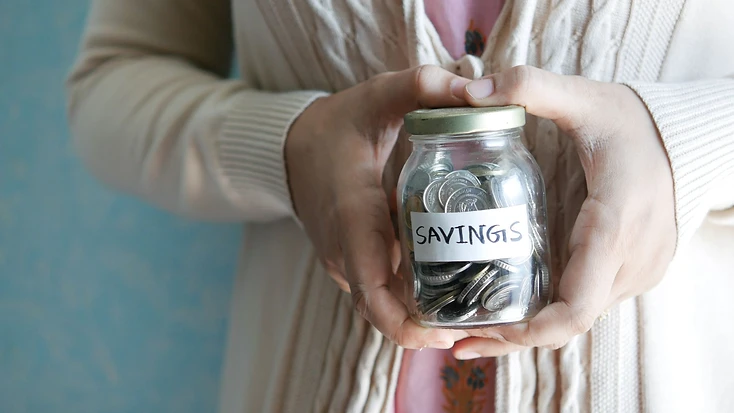
The first goal is smaller than you think
You have probably heard that an emergency fund should cover three to six months of essential expenses. Many financial planners do use that range as a rough benchmark, and the Consumer Financial Protection Bureau deliberately avoids naming a single figure, suggesting instead that you size the goal from your own past expenses and noting that even a small amount provides real financial security. The right number depends on your income stability, your dependents, and how quickly you could replace a job. Treat any published figure as a starting reference, not a rule.
What matters more than the destination is the first milestone. A buffer equal to one week of essential costs is small enough to reach on a tight budget, and it still turns a surprise into an inconvenience rather than a credit card balance.
Essential costs means obligations, not your current lifestyle: housing, utilities, food, transport to work, insurance, minimum debt payments.
What one week actually costs
Take an illustrative household with these monthly essentials. Your own figures will differ, but the arithmetic works the same way.
| Essential cost | Monthly |
|---|---|
| Rent | $1,200 |
| Utilities | $150 |
| Food | $400 |
| Transportation | $120 |
| Insurance | $110 |
| Minimum debt payments | $170 |
| Total | $2,150 |
One week of those costs is $2,150 × 12 ÷ 52 = $496.15, roughly $500. A three-month cushion on the same budget is $6,450.
Two details matter. First, $496.15 comes from a year of 52 weeks rather than from dividing by four, because a month is slightly longer than four weeks. Second, reaching $6,450 at $200 a month does not take 32 deposits. Dividing gives 32.25, so 32 deposits of $200 reach only $6,400 and a 33rd is needed to pass $6,450. At $400 a month, 16 deposits reach $6,400 and a 17th passes the target. The division tells you the pace; the deposit count tells you when the money is actually there.
Choosing a first target you will finish
Pick a figure you can reach in roughly two to three months of saving. At $25 a week, a $500 target takes 20 weeks. If a tax refund of $640 arrives, it covers the $496.15 target with $143.85 left over, which is a reasonable step toward the next milestone.
A target you finish builds the habit; a target you abandon builds nothing. If $25 a week is not sustainable, $10 a week is still a fund.
Building it from small contributions
- Set the transfer for payday, not for the end of the month. Whatever is left at the end of the month is not a savings strategy.
- Use an amount you will not cancel. A small automatic transfer that runs 12 months in a row beats a large one that runs twice.
- Send windfalls straight there. A refund, a bonus or a gift is the easiest money to save because it was never part of the plan.
If your budget is not yet stable enough to free up a regular amount, a simple monthly budget you can keep is the place to start.
Where to keep it
Separate from the account you spend from, and reachable within a day or two. The point is friction, not a locked vault: money that takes three steps to reach is money you are less likely to spend on a takeaway.
A savings account that is not linked to your card is usually enough, and deposit insurance is worth checking: the FDIC explains which accounts are covered. Anything that can fall in value is not an emergency fund: the whole purpose is that the amount is known.
What counts as an emergency
A useful test: is it unexpected, necessary and urgent? A broken appliance you need to cook with, yes. A sale on something you had wanted for months, no.
Write your own two or three examples down in advance. Deciding in the moment is when a buffer becomes spending.
When your income is irregular
If your pay varies, a fixed monthly transfer will sometimes be impossible and sometimes easy. Base the target on a low month rather than an average one, save a proportion of each payment while income is good, and accept that a smaller buffer you can actually fund is more useful than a larger one you never reach.
Emergency savings versus expensive debt
The arithmetic is worth seeing plainly.
| $500 for one year | Approximate result |
|---|---|
| Carried on a card at 24.99% APR | about $124.95 in interest |
| Held in savings at 4% | about $20, before tax |
| Difference | about $104.95 |
These are simplified illustrations. They use simple interest rather than a credit card amortisation schedule, and 4% is not a promised yield. Real borrowing costs and real savings rates both change.
The comparison does not produce one correct order for everyone. Essential bills and minimum debt payments come first, because missing them carries consequences no interest rate captures. Beyond that, many people do best with a small buffer in place, then concentrated repayment of expensive debt, then a fuller cushion. If you are weighing that choice, how snowball and avalanche repayment compare sets out both approaches.
Rebuilding after you use it
Using the fund is the fund working, not failing. What matters is that the automatic transfer is still running afterwards, so the buffer refills without another decision. A $180 repair, rebuilt at $30 a week, is covered again in six weeks.
If you needed it twice in one quarter, that is information: the recurring expense is the problem, and the fund is treating a symptom.
How Monyra handles the target
Monyra records each savings goal with its own target amount and current balance, logs contributions as you make them, and shows progress, the contribution history and a progress estimate for each goal. It never moves money; it records what you tell it, so the target reflects the circumstances you set, not a figure the app chose. The same essentials-versus-income thinking sits behind the debt and budget planner.
About the author. The Monyra editorial team writes plain-English explanations of personal finance topics, and links each one to the tool that applies it.